Amur Region · Ivanovsky municipal district · Srednebelaya
Industrial site of 11.07 hectares with its own railway track
A 49-year lease until 2075 with the right of free assignment. Fourteen buildings and a 700-metre railway track are held in ownership. 12 kilometres by rail to the Blagoveshchensk dry port, about 70 kilometres to the Russia — China road crossing with a customs checkpoint.
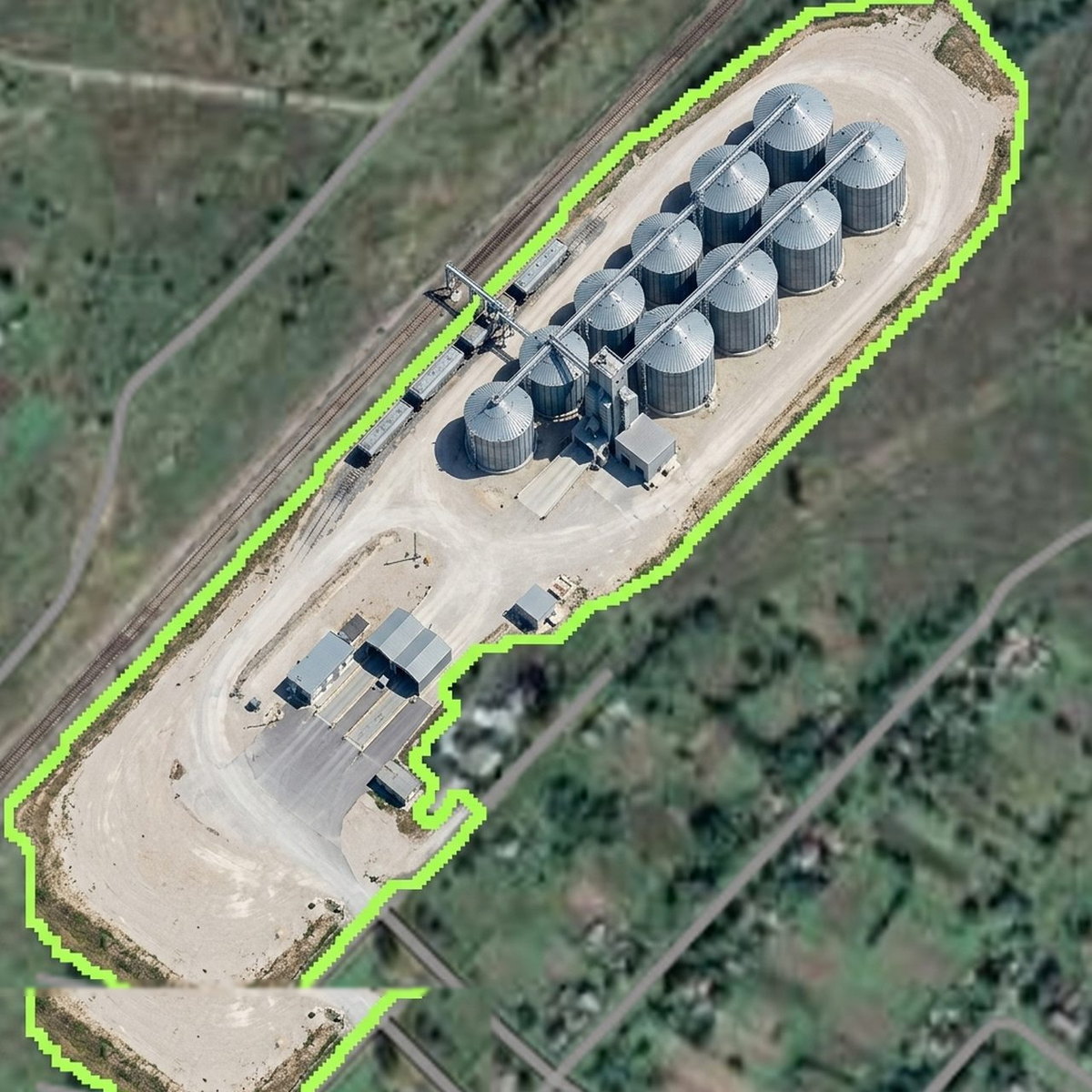
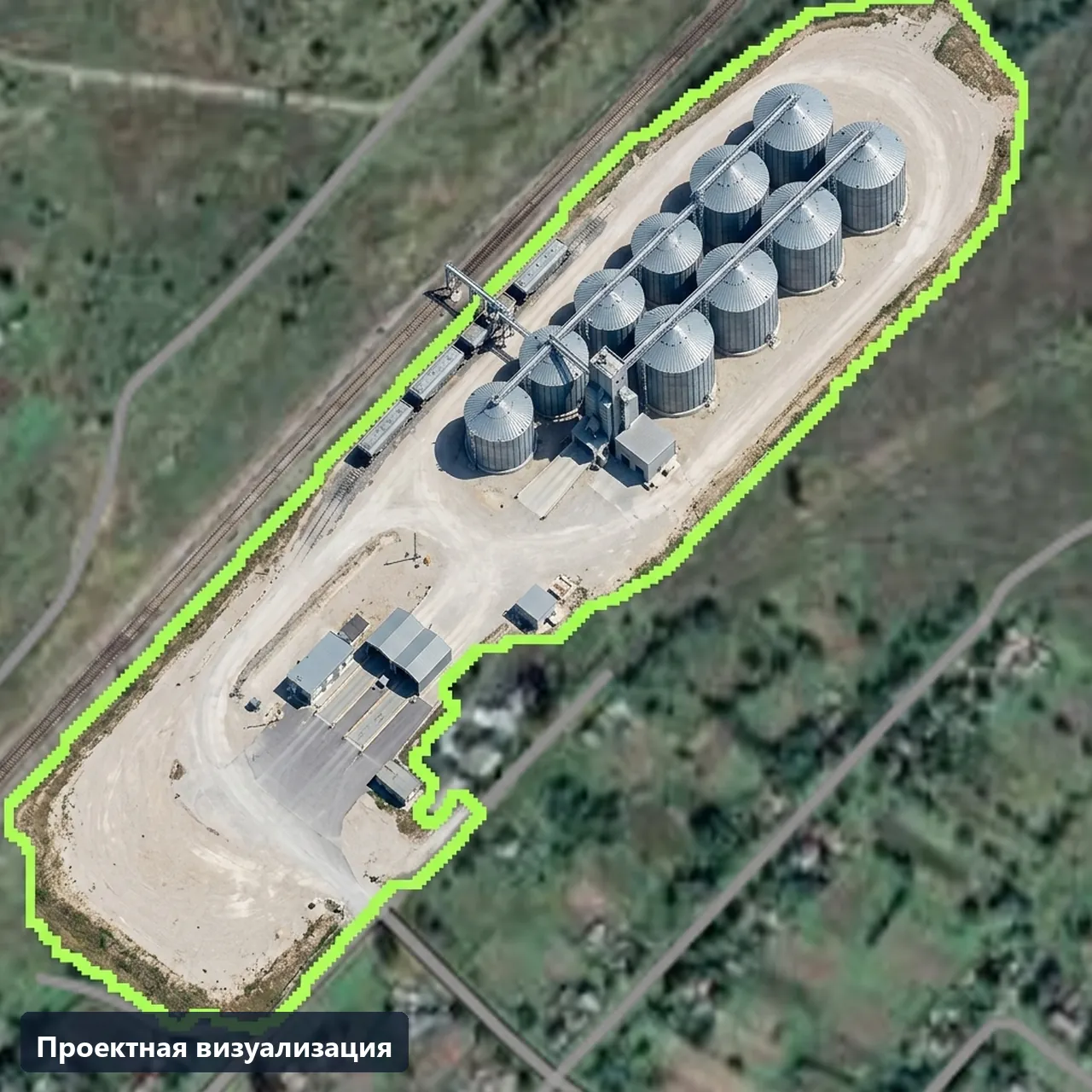
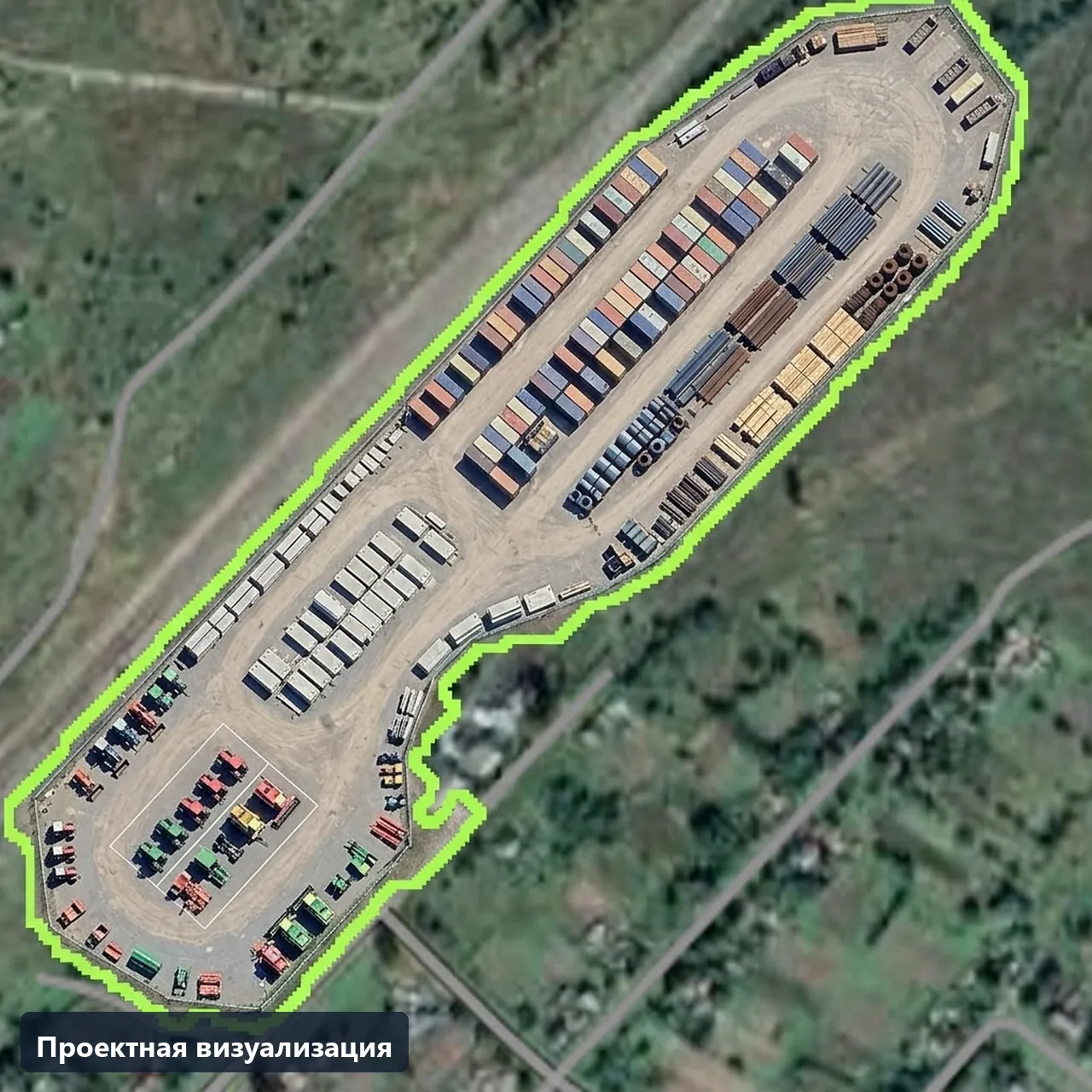
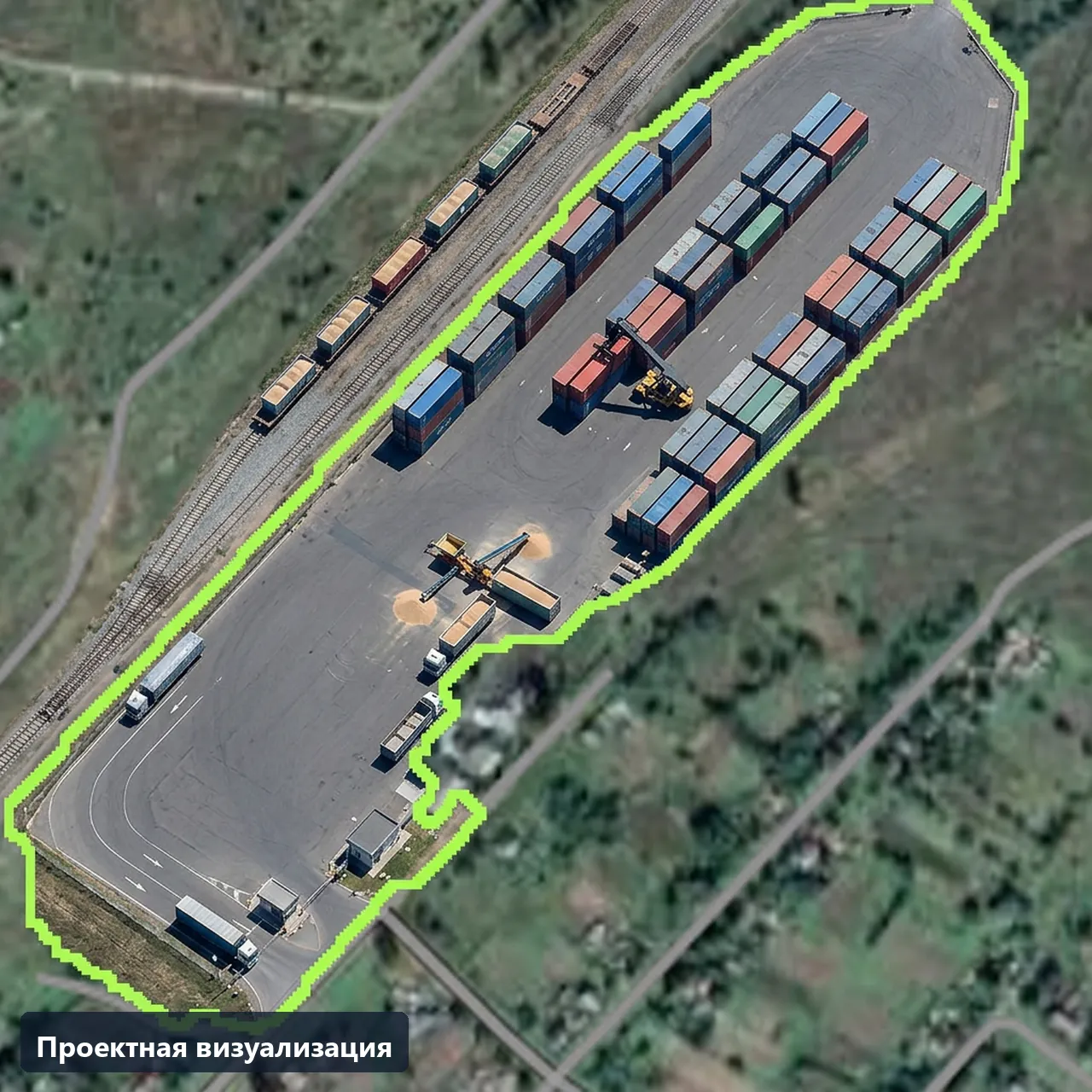
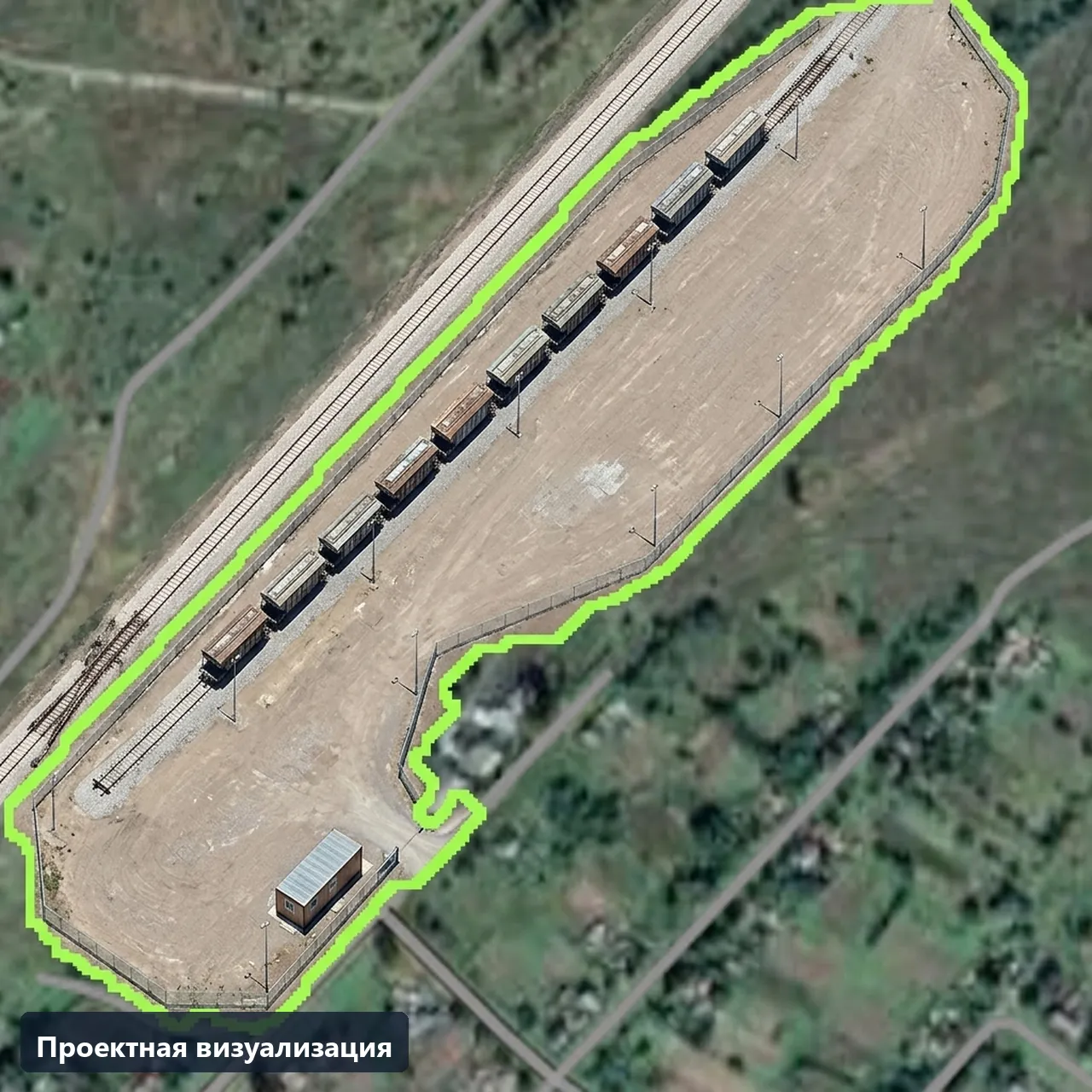
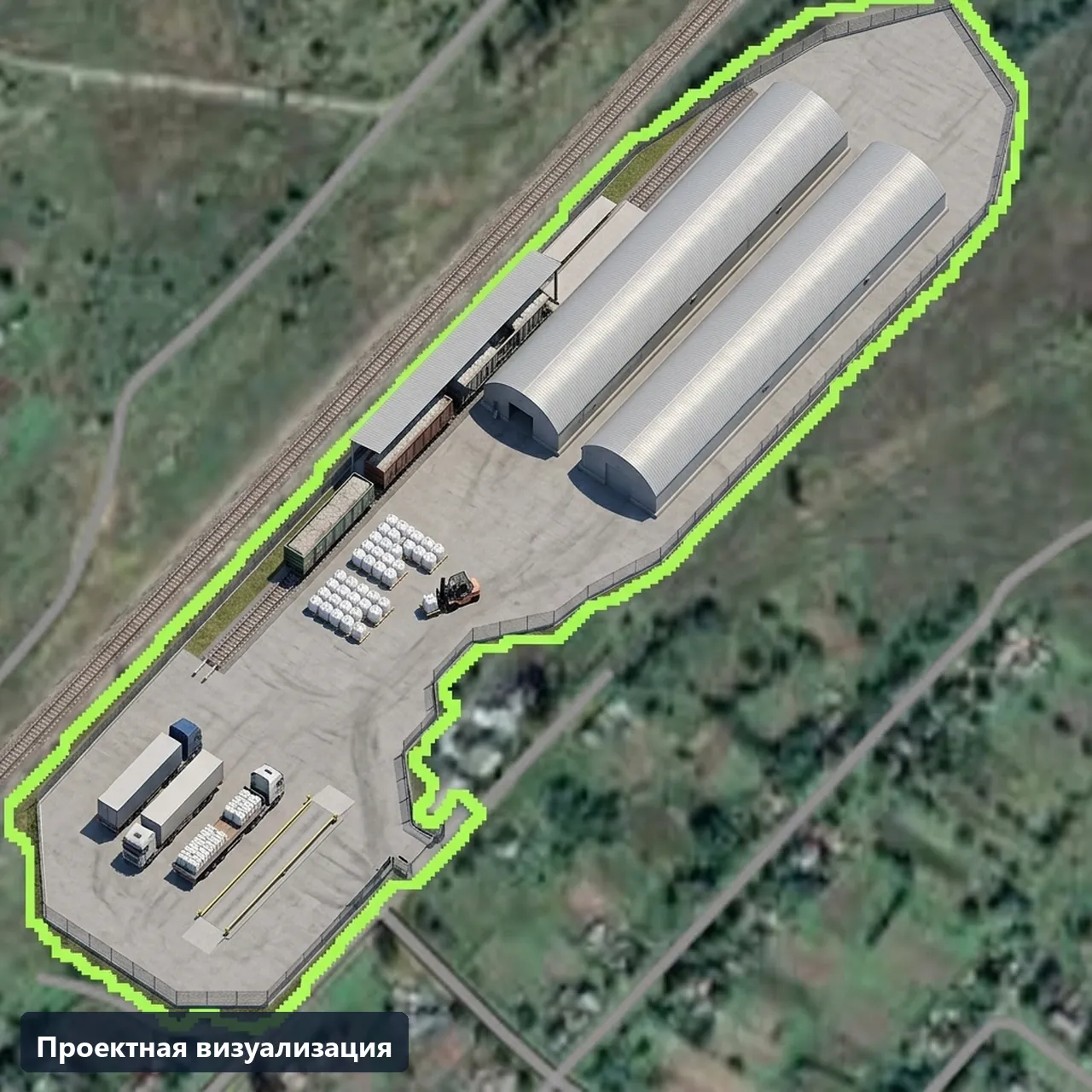
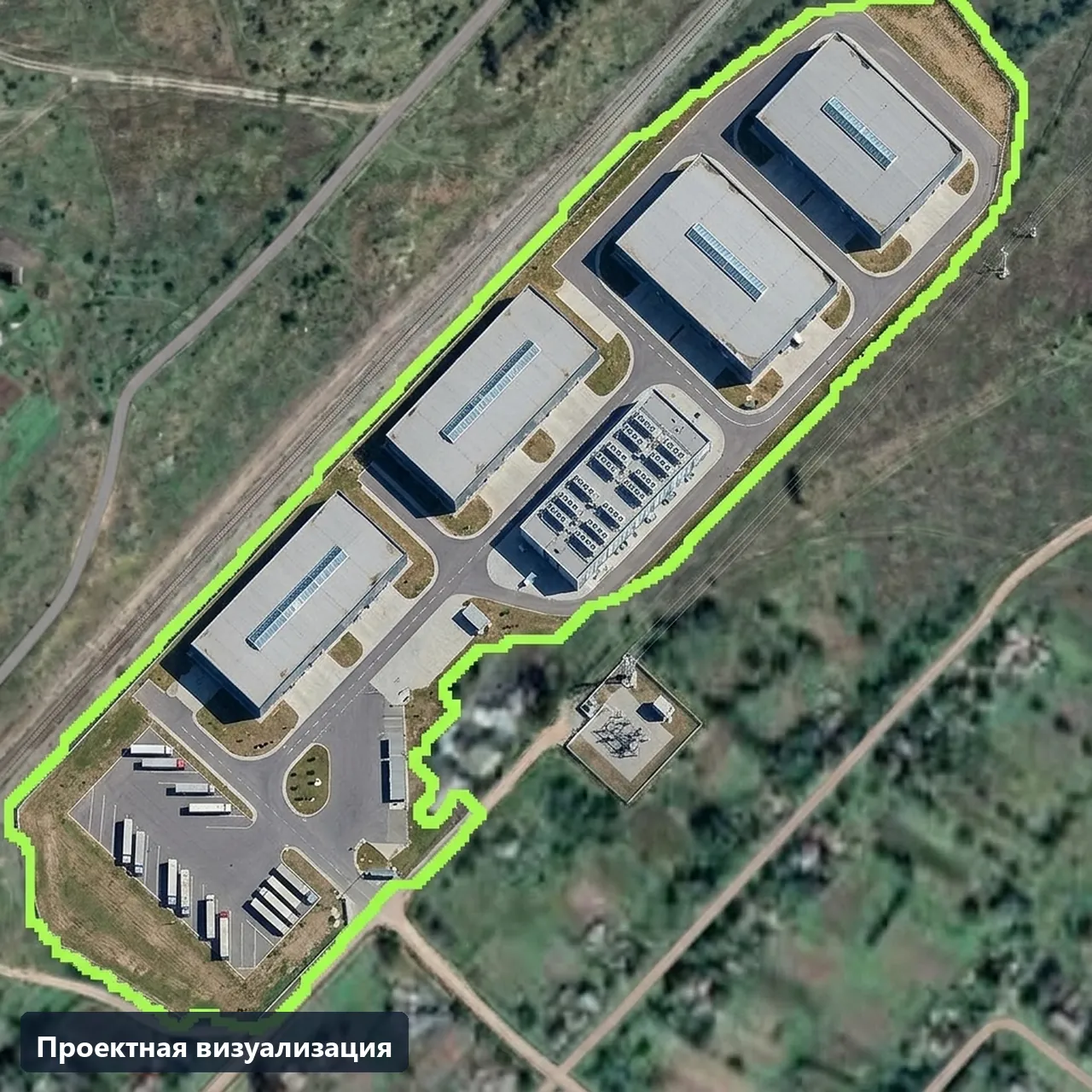
Project visualisationMove the cursor to see the project
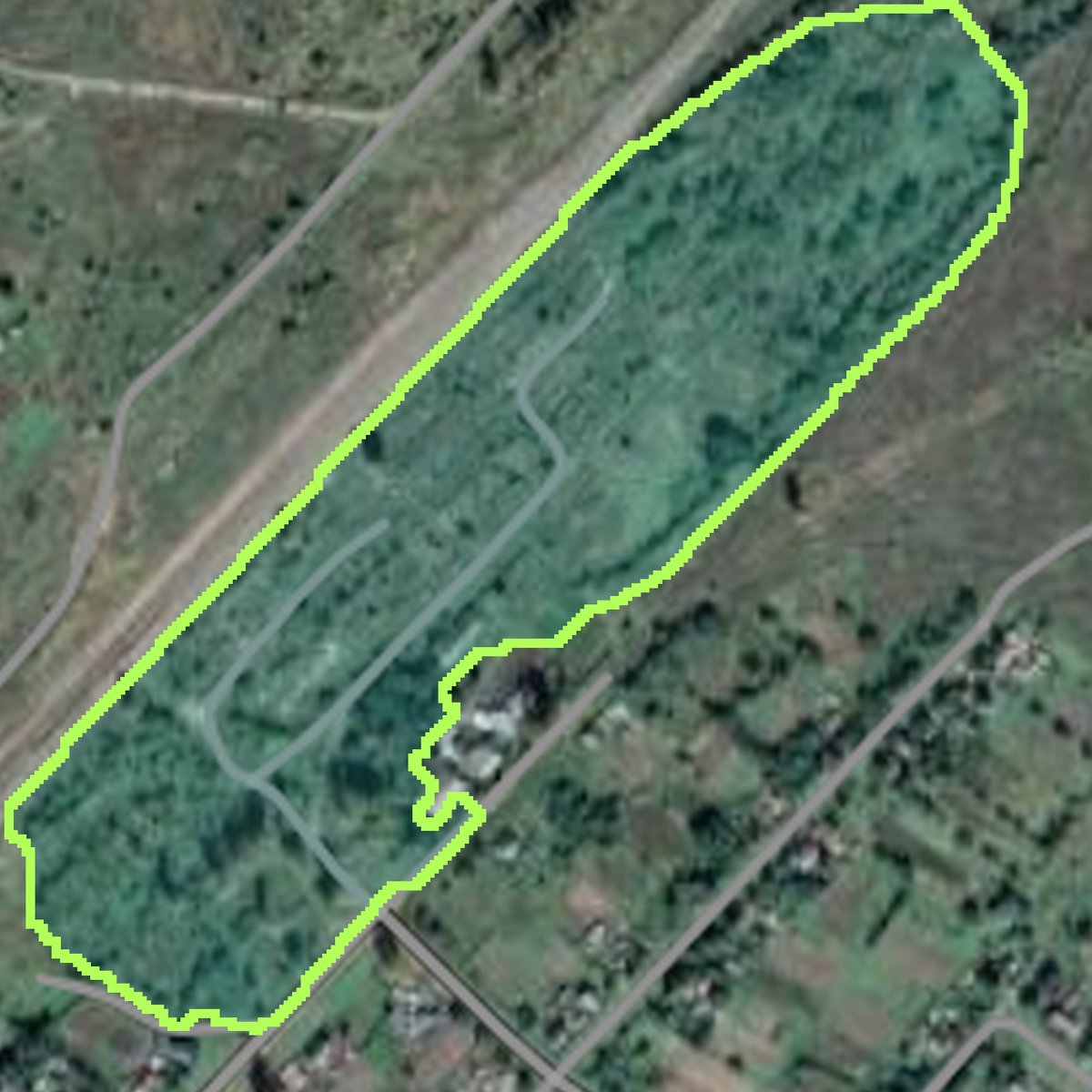
Under the magnifier — a project visualisation placed on the real satellite image of the site. Boundaries per the state register.
11.07 ha
site area
49yrs
lease, until 19.06.2075
700m
of railway track in ownership
14
registered buildings
~70km
to the international Russia — China crossing: the Blagoveshchensk — Heihe bridge and customs
01 — parameters
Site parameters
All figures below come from extracts of the Unified State Register of Real Estate of the Russian Federation (EGRN), the lease agreement and the cadastral engineer's report. Copies are provided on request after a non-disclosure agreement is signed.
Site area
110,652 ± 233 m² (11.07 ha)
Cadastral number
28:14:010311:1
Dimensions
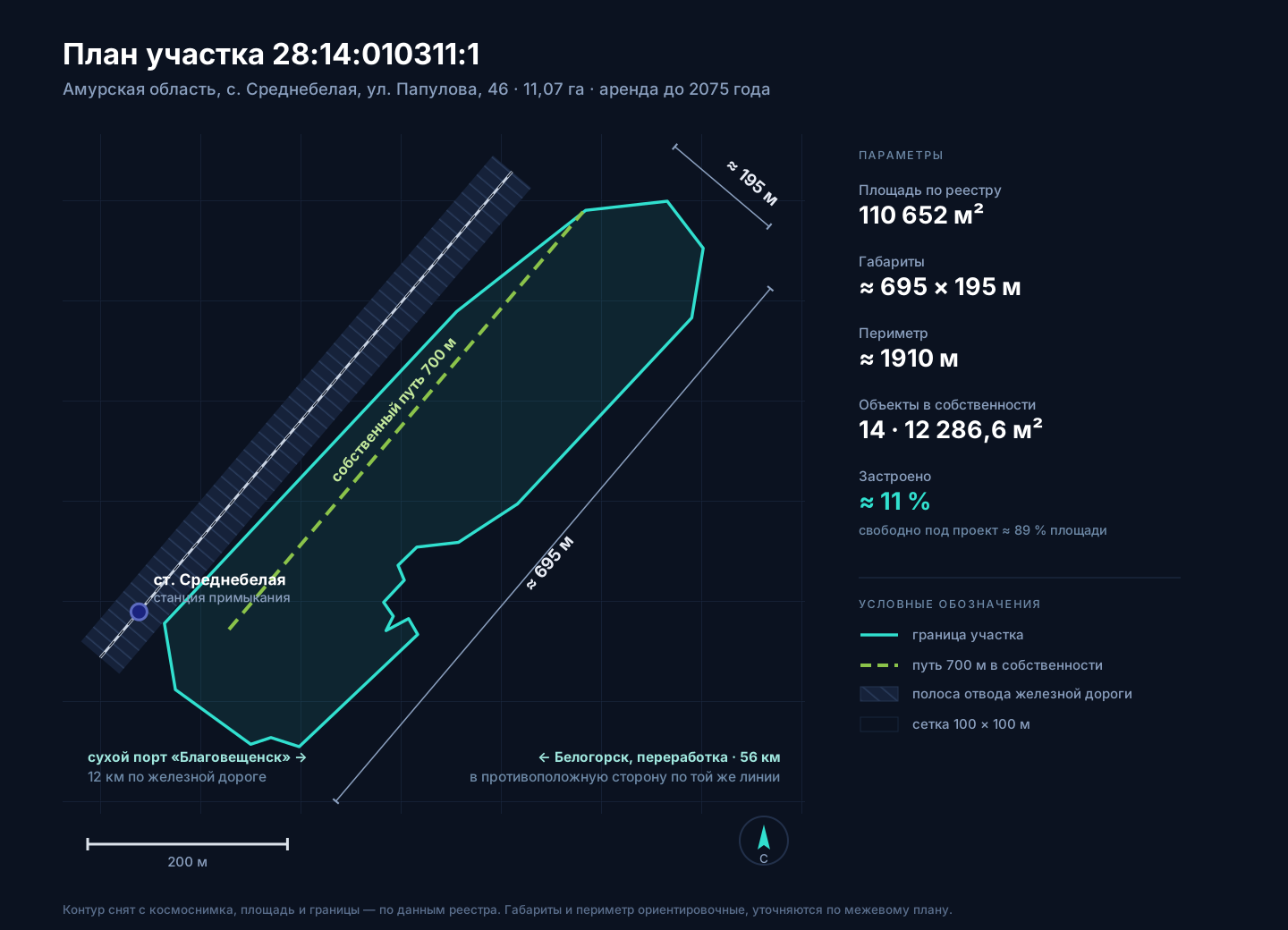
≈ 695 × 195 m, perimeter ≈ 1,910 m (approx., from satellite imagery)
Address
Amur Region, Ivanovsky municipal district, Srednebelaya, Papulova st., 46
Land category
settlement land (industrial use, not residential)
Permitted use
for industrial purposes
Registered in the cadastre
16 April 2004
Title
lease, 49 years — from 19.06.2026 to 19.06.2075
Lease agreement
No. 22/26-ZUri of 19.06.2026, registered in EGRN on 23.06.2026
Landlord
Property Management Committee of the Ivanovsky municipal district
Encumbrances and restrictions
no encumbrances, seizures or third-party claims registered
Buildings in ownership
14 units, 12,286.6 m² per EGRN extracts
Railway track
700 m, cadastral number 28:14:010311:73, in ownership
asphalt almost up to the site, the last 400 m are gravel
What market participants say
The plant is expected to process soybeans from across the Far East: besides the Amur Region, that is the Jewish Autonomous Region, Primorsky and Khabarovsky territories.
Pavel Zarkov, Director for Investment and Development, Sodruzhestvo Group, June 2026. [10]
It is no secret that the Trans-Siberian is seriously overloaded, since the main export flow goes through the Far East.
Today the region processes around 430 thousand tonnes of soybeans a year. The new plant being built by Sodruzhestvo Group will add about 1 million tonnes of processing.
Oleg Turkov, Deputy Chairman of the Amur Region government and Minister of Agriculture, February 2026. [9]
The key lease provision: free assignment
Clause 5.1.2 of the lease: the tenant may transfer its rights and obligations under the agreement to a third party, sublease the plot, pledge the lease rights and contribute them to a company's charter capital — without the landlord's consent, notification is sufficient. Clause 7.1: reorganisation of the parties or a change of the plot's owner is not grounds for termination.
In practice this means an investor can enter through any structure — purchase, assignment, or a contribution to a joint venture — and none of them requires an application to the municipality for consent.
Verify it yourself, without leaving this page
The boundaries, area and title are registered in the state register and are visible on the public cadastral map of Rosreestr. Paste the number into the search field and compare it with our drawing:
Where to check: the public cadastral map — paste the number into the search bar; or the real estate reference service on the Rosreestr portal. These are government services and are occasionally unavailable — this has nothing to do with the property.
Register extracts, the lease agreement and the title documents for the buildings are provided on request after a non-disclosure agreement is signed.
Sources: EGRN extracts for the plot and the structure, lease agreement No. 22/26-ZUri, cadastral engineer's report of 11.09.2023. Copies are provided on request.
A former grain receiving facility 12 kilometres by rail from the Blagoveshchensk dry port. Three things rarely found together: a long-term land title with free assignment, fourteen registered buildings and a private railway track connected to the station.
The future owner defines what the site becomes. We disclose what is known about it and show which uses it objectively allows.
core of the asset
Railway
700 m · in ownership
A 700-metre railway track, cadastral number 28:14:010311:73, built in 1992. Ownership registered on 24.04.2018, no encumbrances registered.
The site directly borders the railway right-of-way — no level crossing and no passage over third-party land are required. The connection to public tracks is restored under the technical conditions of the infrastructure owner; the application has been submitted.
Land title
11.07 ha · until 2075
110,652 m² of settlement land, permitted use — for industrial purposes. A 49-year lease: agreement No. 22/26-ZUri of 19.06.2026, registered on 23.06.2026. No encumbrances, seizures or claims registered. The agreement allows assignment, sublease, pledge and a charter-capital contribution without the landlord's consent.
Buildings
14 units · 12,286.6 m²
Capital construction objects in the company's ownership, registered in the cadastre: grain warehouses, a four-storey tower, a weighbridge house, a brick substation. The buildings require reconstruction. A court-appointed construction expert examination confirmed that the concrete strength grades meet GOST 13015-2012 and SP 63.13330.2018 and that thirteen buildings can be reconstructed for their original purpose.
Open largerSite plan: the outline is traced from satellite imagery, the area and boundaries are per the state register. Dimensions and perimeter are approximate and subject to the land survey plan.Show the list of buildings
Cadastral number
Name
Area, m²
28:14:010311:78
Grain warehouse No. 14
1,302.2
28:14:010311:74
Grain warehouse No. 11
1,266.7
28:14:010311:80
Grain warehouse No. 4
1,239.1
28:14:010311:95
Grain warehouse No. 12
1,212.9
28:14:010311:77
Grain warehouse No. 5
1,212.6
28:14:010311:81
Grain warehouse No. 13
1,190.4
28:14:010311:88
Grain warehouse No. 15
1,171.2
28:14:010311:76
Grain warehouse
1,094.8
28:14:010311:92
Grain warehouse No. 3
928.8
28:14:010311:89
Grain warehouse No. 6
875.2
28:14:010311:91
Materials warehouse
394.4
28:14:010311:93
Drying and cleaning tower, 4 storeys
308.3
28:14:010311:84
Truck weighbridge house
48.6
28:14:010311:79
Substation, 2 storeys, brick
41.4
Total
14 buildings
12,286.6
The list and areas are per EGRN extracts and the 2012 sale agreement. The railway track 28:14:010311:73 is registered separately and is not included in the total floor area.
03 — logistics
Where it is
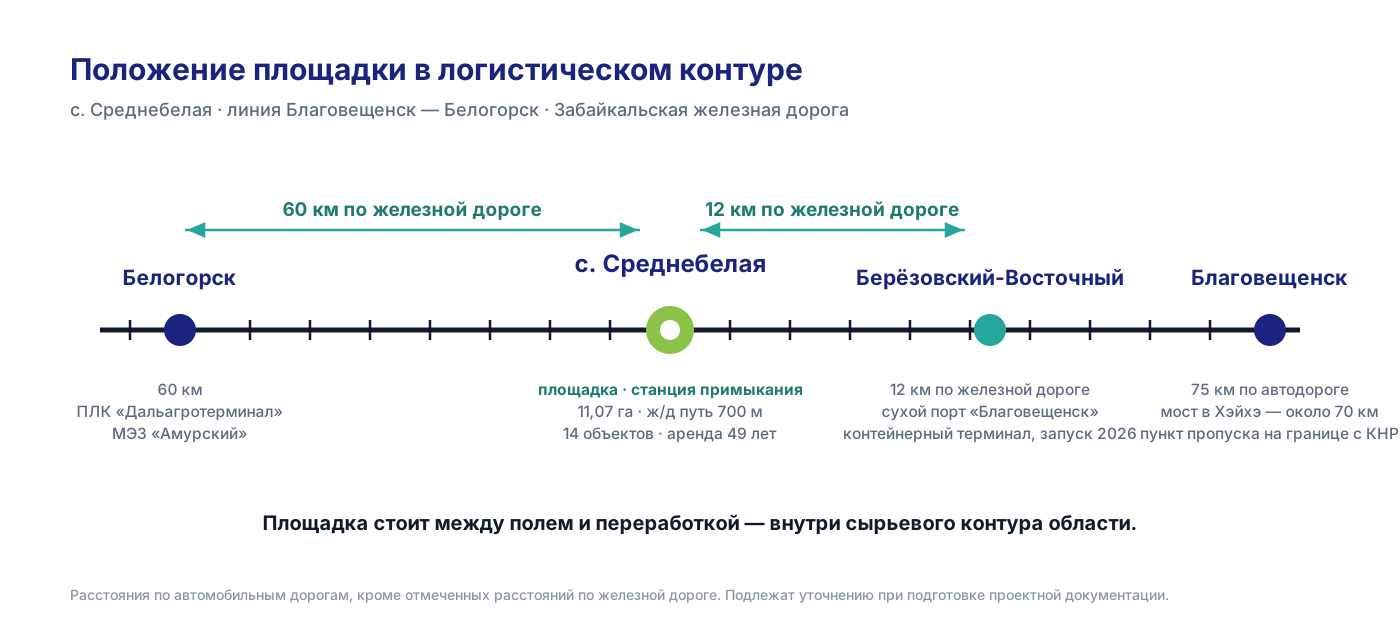
Srednebelaya, Ivanovsky municipal district, Amur Region. The site adjoins the right-of-way of the Blagoveshchensk — Belogorsk railway line; the connecting station is Srednebelaya. It sits inside the region's raw-material zone and within an hour's drive of two processing plants.
Open largerThe site within the logistics loop. Diagram, August 2026.
12 kmto the Blagoveshchensk dry port by rail
56 kmto Belogorsk, the region's soybean processing centre
~70 kminternational Russia — China crossing: the Blagoveshchensk — Heihe road bridge and the Kani-Kurgan customs checkpoint
75 kmto Blagoveshchensk
3–5 kmto the Blagoveshchensk — Belogorsk federal highway
The site stands where two flows cross. The domestic one runs between the farms of the region's south-west and processing in Belogorsk, 60 kilometres away. The export one runs 12 kilometres by rail to the Blagoveshchensk dry port and about 70 kilometres by road to the international Russia — China crossing, where the Blagoveshchensk — Heihe bridge and the Kani-Kurgan checkpoint operate. Which flow becomes the primary one is defined by the owner's project.
Distances are given per the rightholder's data and are verified during design. The distance to the dry port is by rail, the others are by road.
04 — why now
The region is turning its raw-material flow inwards
The Amur Region ranks first in Russia for soybean production, about 19 % of the national harvest. The 2025 crop was 1.73 million tonnes at 19.3 centners per hectare. Soybeans occupy 874 thousand hectares in 2026; the harvest is expected at last year's level. Until recently the surplus was shipped out of the region. That is now changing.
1.73 mt
soybean harvest in the region, 2025
About 300 thousand hectares, a third of the region's soybean plantings. For two districts out of three the site is twice as close as the plant: the grain comes here rather than passing by.
Data of the Ministry of Agriculture of the Amur Region, 2026 sowing campaign. Distances by road. Sources [3], [2].
How much soy grows around the site
87 thou. haIvanovsky districtthe site is right here
127 thou. haTambovsky district67 km to the site, 123 km to Belogorsk
80 thou. haKonstantinovsky district122 km to the site, 178 km to Belogorsk
1st place
in Russia for soybean production
430 kt
processed inside the region today
~1.43 mt
domestic processing once new capacity starts
Fifty-six kilometres from the site, in Belogorsk, new processing capacity is coming on stream: from November 2026, when the plant reaches design capacity, domestic soybean processing in the region grows from 430 thousand tonnes to around 1.43 million tonnes a year. The direction of the agricultural flow changes — instead of shipping out of the region, the crop is gathered towards domestic processors. The site sits on that route.
Export infrastructure is developing in parallel. The Blagoveshchensk dry port — 12 kilometres away by rail — opened in May 2026, receives up to two container trains a day and is scaling simultaneous container storage to 15,000 TEU by 2030. The Kani-Kurgan road checkpoint has operated 16 lanes since December 2025, with a capacity of 862 vehicles a day.
Preferential regime
The site lies in the area covered by the "Amurskaya" advanced special economic zone (TOR — the preferential regime for the Russian Far East). Applying the regime to this site requires its inclusion within the zone's boundaries — the procedure exists and the application route is known. The minimum capital investment threshold for a resident is 500,000 ₽, which keeps the regime available even to a small project.
The cadastral quarter of the site is not currently listed within the zone, so the regime does not apply automatically. The timing of the procedure depends on the authorities and we do not forecast it. A detailed analysis of the applicable support measures and resident requirements is provided on request.
Data — open publications of the Amur Region authorities and industry media for 2025–2026; verify them as of the date of your enquiry.
05 — possible uses
What can be placed here
Below are the directions the site objectively allows, with the constraints of each. The final use is defined by the owner in line with their own plans.
Truck intake from farms, cleaning and drying, storage and rail dispatch to processing plants. This matches the site's history — it is a former grain receiving facility. Sanitary gap: 50 metres for flat storage, 100 metres for an elevator.
Aggregates, rolled metal, timber, concrete products, empty containers. Deployed in stages and requiring no capital construction at the first stage. Within the power line protection corridors, storage and parking of machinery require the grid operator's approval.
Accumulation of empty containers and bagging of agricultural cargo for dispatch through the dry port 12 kilometres away. Shipping soybeans and grain in liner-bag containers is an established format on the China route. This direction is compatible with a grain terminal: the same consignment can leave either by wagon or by container.
The 700-metre track holds about 45 wagons. It requires restoration of the track and its inclusion by the infrastructure owner in the list of tracks suitable for storage, as well as fencing and security for the site.
Market context: over the past year stabling rates on private tracks have risen several-fold — industry publications for 2026 put them at 500–650 RUB per wagon per day on various railways. The surplus of open wagons on the network is around 170 thousand units. Benchmarks from open sources, not a calculation of income.
Two-season logic: fertilisers arrive by wagon in winter and spring, grain ships out in autumn. Constraint: above 50 tonnes the sanitary gap is 300 metres, which within settlement boundaries requires a separate study.
There is ample free land for new construction — the built-up ratio is about 11 %. The decisive factor is the available electrical capacity: a 10 kV line is connected, the capacity is being confirmed with the grid operator.
A different use for the site
If your project does not fit any of these scenarios, describe the task. We will answer from the facts of the site: what is possible, what is not, and on what conditions.
The asset is put together so that a buyer can enter the project and exit it without approvals from the local authority. Four provisions carry that structure.
Forty-nine years, until June 2075
The lease was concluded on 19 June 2026 for 49 years and registered in EGRN on 23 June 2026. The term covers the full life cycle of any industrial project, including the payback period, and removes the question of renewal from the investor's planning horizon.
Assignment without the landlord's consent
The lease expressly grants the tenant the right, within the term of the agreement, to transfer its rights and obligations to a third party, sublease the plot, pledge the lease rights and contribute them to charter capital — without the landlord's consent, subject to notification. In practice that means four available formats: sale of the lease right, sublease, a bank pledge, and a contribution to the charter capital of a joint company.
A change of owner does not break the lease
The agreement provides that reorganisation of the parties and a change of the plot's owner are not grounds for unilateral amendment or termination. A deal at the level of the legal entity — a change of shareholders, reorganisation, an investor entering the capital — creates no risk for the lease.
Title tested in court and clean in the register
Ownership of the railway track was registered in 2018 on the basis of a court decision that entered into force and the 2012 sale agreement — both documents are named in the EGRN extract as grounds for registration. No seizures, mortgages, judicial claims or expropriation decisions are registered against the plot or the buildings.
1992The plot was assigned to the Srednebelsky grain receiving enterprise
2004Cadastral number assigned, area 110,652 m²
2012The property complex was acquired under a sale agreement
2018A court recognised the company's ownership of the buildings; registered in the state register
2021A court-appointed expert examination confirmed structural strength and the feasibility of reconstruction
2026A 49-year land lease was concluded and registered, free of encumbrances
More than ten years of proceedings ended in the company's favour on every key question — the title was tested in adversarial process.
Copies of the title documents, register extracts and court acts are provided on request after a non-disclosure agreement is signed.
07 — as is
What the site has — and what it does not
The site is not turnkey-ready for construction, and we say so before the first conversation rather than after a visit. Missing utilities are a budget line of the project, and they must be in the buyer's model from the outset.
In place
Land title until 2075 with free assignment
Fourteen registered buildings
700 m railway track in ownership
Direct border with the railway right-of-way
A 10 kV power line at the site
Paved access almost up to the site
No encumbrances, seizures or third-party claims
To be done
Restoring the connection under the technical conditions of the railway infrastructure owner
Confirming the available electrical capacity with the grid operator
Bringing in water supply and sewerage
Clearing the area of shrubs and debris
Fencing and lighting
Reconstruction of the buildings
Site preparation is a budget line of the project, not a hidden defect. We show the site as it is.
Constraints to allow for in the project
The site lies within settlement boundaries and residential development adjoins it from the south-east. The size of the sanitary protection zone depends on the class of the facility: grain storage — 50 metres, an elevator — 100 metres, a mineral fertiliser warehouse above 50 tonnes — 300 metres, a machinery yard with repairs — 300 metres, a customs terminal — 500 metres.
What this means on the ground. From satellite imagery, individual homesteads abut the southern and eastern boundaries, while the northern part of the site is clear: from there to the nearest housing is about 250–300 metres. The building footprint therefore shifts north, and the southern part remains for access roads, parking and planting. Distances are traced from satellite imagery and are subject to measurement on site — that is the first step in working through any scenario.
Two power lines owned by third parties cross the site: 0.4 kV and 10 kV overhead lines. Their protection zones are 2 and 10 metres on each side respectively. Within these corridors, construction, storage and parking of machinery require the grid operator's approval.
Natural conditions: the village lies 4 kilometres from the Belaya river and is not on the list of flood-prone settlements kept by the Amur hydrometeorological centre.
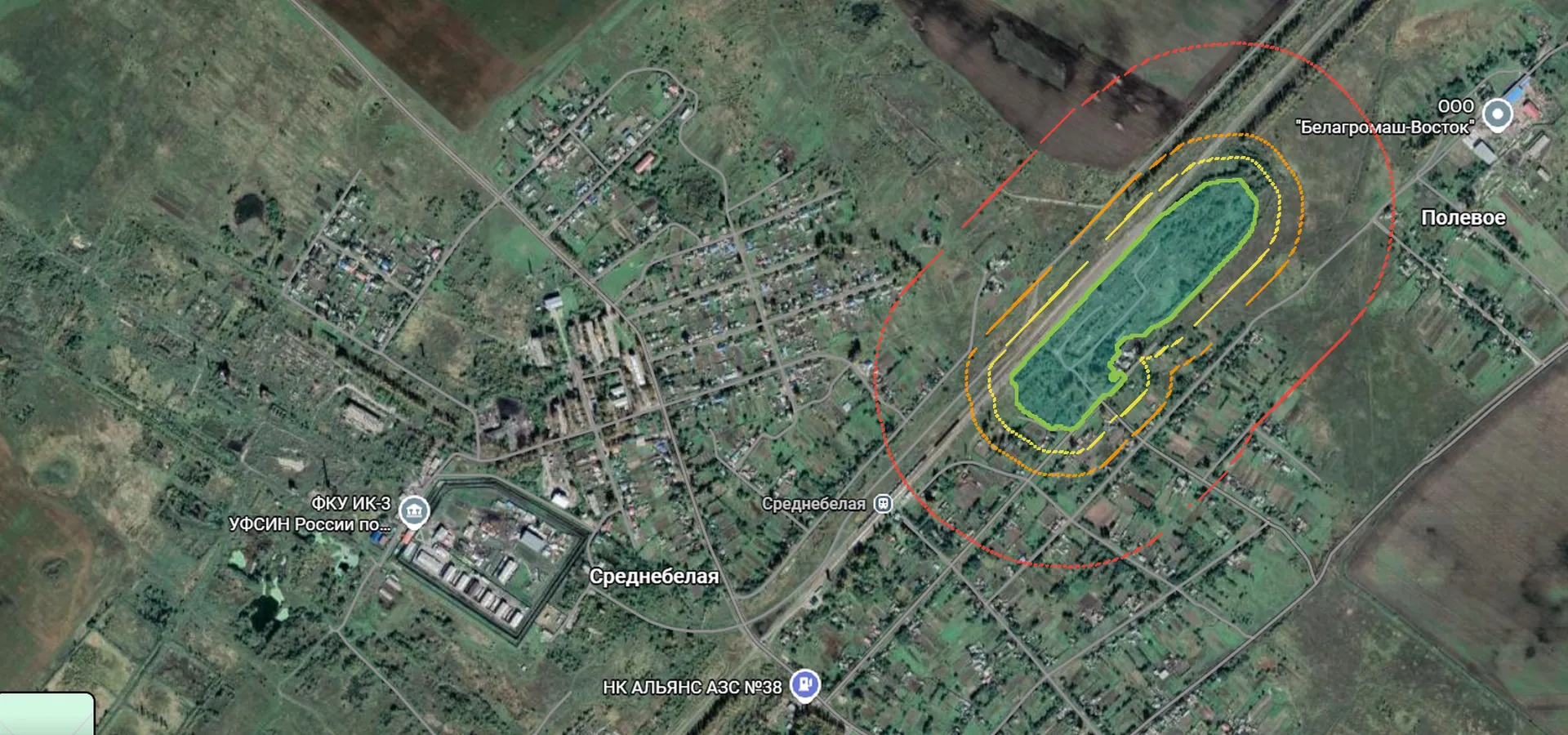
Open largerIndicative sanitary gaps of 50 / 100 / 300 metres on a satellite image. Schematic, not to scale; actual distances are measured when a scenario is worked through. August 2026.
We deliberately list the constraints on the first page. A buyer can verify each of them in a day or two, and it is better for the conversation to start from the full picture than from an unpleasant discovery during a visit.
How a project on this site begins
The order of the new owner's first actions. The timing depends on the authorities and the grid operator, so we do not forecast it — but the sequence is exactly this.
01Technical conditions for the connectionAn application to the infrastructure owner to restore the connection to public tracks. It defines both the cost of restoring the track and the permitted volumes of wagon delivery.
02Request for available capacityAn application to the grid operator: how much capacity is available on the 10 kV feeder. The answer determines which scenarios are feasible at all — from a warehouse to a data centre.
03Measuring the sanitary gapsA field measurement of distances from the future building footprint to the nearest housing. It determines the class of facility that can be placed and the position of the footprint.
04Engineering surveysGeology and an assessment of the existing foundations against the loads of the future project — a silo park, a warehouse, a production building.
We have walked this path ahead of you: the application for the technical conditions of the connection has already been submitted, and the facts gathered are handed over to the buyer together with the asset.
What it costs to assemble a site like this from scratch
A buyer is choosing not between this site and another piece of land, but between this site and three or four years of their own approvals with an unknown outcome.
Component
From scratch
Time
11 ha of industrial land
3–6 m₽
up to 1.5 years
700 m railway track with a connection
20–45 m₽
2–3 years
Grid connection for electrical capacity
10–25 m₽
1–1.5 years
Total direct costs
33–76 m₽
3–4 years
Benchmarks from open data of contractors, not an estimate. Given to assess the cost of recreating the asset, not as its price: deal terms are discussed individually.
08 — deal formats
How you can enter the project
The deal structure is open to discussion, there are no rigid frames. The lease allows disposal of the right without the landlord's consent, so five formats are available, from an outright purchase to a long-term lease.
Investment with a share split
The investor enters the capital, the parties agree the shares and develop the site together. A format for those who want to share both the investment and the result with the current owner.
Joint venture
The lease rights are contributed to the charter capital of a new company and the partner contributes financing. Contribution of the rights to charter capital is expressly allowed by the lease and requires no landlord's consent.
Assignment of the lease with the buildings
The lease right passes to the acquirer for the remaining term — until 2075 — and the buildings are transferred at the same time. The landlord's consent is not required, notification is sufficient.
Acquisition of the company
Purchase of the shares in the company that owns the buildings and the lease right. The asset transfers as a whole and the lease is not renegotiated when the shareholders change.
Long-term lease of the site
The site, in whole or in part, is subleased for an operational task — without changing the tenant and without a deal on the asset. The landlord's consent is not required.
Your own deal structure
If none of the formats fits your task — describe it. Terms are discussed individually.
The buildings require reconstruction. A court-appointed construction expert examination confirmed that the concrete strength grades meet the applicable standards and that reconstruction for the original purpose is feasible.
Is the railway track operational?
The track is in ownership and registered in the state property register. The connection to public tracks is restored under the technical conditions of the infrastructure owner; the application has been submitted.
Can the land be bought out?
Russian law grants the owner of buildings on a plot an exclusive right to purchase that plot, with no public auction. The procedure for determining the price is set by the municipality.
Can the lease be resold or pledged?
Yes. The agreement expressly allows transfer of the rights to a third party, sublease, pledge and contribution to charter capital without the landlord's consent.
Are there any encumbrances or disputes?
No encumbrances, seizures or third-party claims are registered. The court proceedings of previous years are closed.
How much electrical capacity is available?
A 10 kV line is connected and a substation building stands on the site. The available capacity is being confirmed with the grid operator.
What is the price?
Terms are discussed individually depending on the chosen deal structure.
Can a foreign investor take part?
Yes. Participation goes through a Russian legal entity — acquiring a stake in the company that holds the asset, setting up a joint venture, or taking an assignment of the lease to a Russian company. The lease is held by a Russian company, and the plot is not in a border area where foreign ownership of land is restricted. The specific structure is worked out together with your lawyers.
Housing is close by — will sanitary zones rule out every scenario?
They rule out specific activities — chemicals and production with a large sanitary zone — not everything. Logistics, storage, rolling-stock parking and light processing all pass. Individual homesteads abut the southern and eastern boundaries, while the northern part of the site is clear — about 250–300 metres to the nearest housing. A buyer will not meet a surprise at the design stage.
A state industrial park is being created nearby — why this site?
State parks solve a different task and work by different rules: restrictions on activities, competitive entry and dependence on budget decisions. This site is private and controllable: build it, lease it out or sell it at the owner's decision. These are different products, not competitors for the same buyer.
Has the dry port already taken the border logistics?
A growing terminal creates demand around itself for back-up capacity: a buffer, storage, accumulation of empty containers. Sitting twelve kilometres from a developing port works in the site's favour.
The area is overgrown — do we clear it at our own cost?
Clearing means vegetation and debris, with no demolition of buildings: they are registered and stay in place. The scope of work is understood and is taken into account when the deal terms are discussed. Part of the work can be done before the deal if the parties agree.
No water and no gas — how critical is that?
It is a budget line of the project, as on any unprepared site. Power is there: a 10 kV line is connected and a transformer substation building stands on the site; the available capacity is being confirmed with the grid operator. Water is solved with a borehole.
Is leasing part of the site considered, rather than an outright sale?
Yes. The site, in whole or in part, can be subleased for an operational task — including the stabling and accumulation of rolling stock. The lessor's consent is not required for this. The tenant's participation in restoring the track, with the outlay set off against the rent, is open to discussion.
Can we visit the site?
Yes, a visit is arranged at an agreed time. Leave a request through the form or call directly.
Request the site materials
Leave your contact and describe the task in a line or two. We reply within one business day: we send a non-disclosure agreement and the document package, and arrange a site visit if needed. Write in English or Russian.
Within one business daywe reply and send the non-disclosure agreement — a standard one-page document
Once signedwe hand over the package: register extracts, the lease, the building documents, the expert reports
At an agreed timewe arrange a site visit — you may come with a technical specialist
Thenwe discuss the deal structure for your task: assignment, shares, a joint project
No mailing lists and no "warm-up" calls — only in response to your enquiry. The site is in the Amur Region, nine hours ahead of UTC, so the form asks for your time zone and a convenient time to call.
The document package can be handed over within one business day